Español
When you hear that interest rates are staying steady, it's easy to think that's good news for your wallet.
“They didn't go up.”
“At least it didn't get any worse.”
“That should help.”
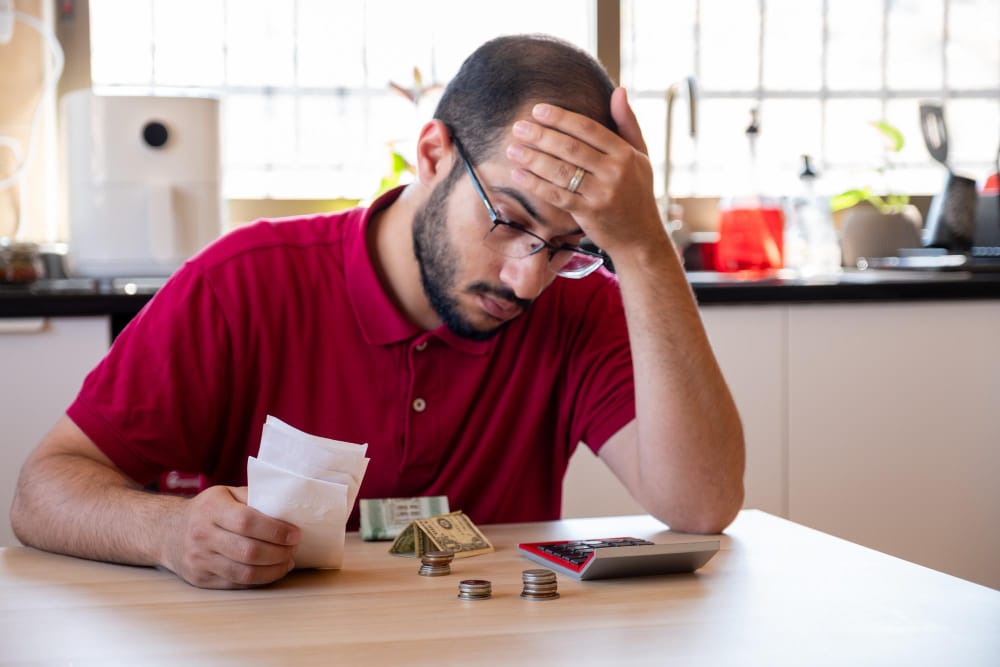
But many people review their budget at the end of the month and feel the opposite: the money keeps disappearing quickly… and the credit card bills keep piling up.
So the question arises:
If rates are stable, why aren't my payments going down?
The answer isn't just in the interest rate. It's in how your debt structure works.
A Common Mistake: Confusing Stability with Relief
Just because interest rates are stable doesn't mean they're low. Nor does it mean your financial situation will automatically improve.
If you have credit cards with high balances, even if the interest rate doesn't go up, interest continues to accrue on a substantial amount.
And when the balance is high, the monthly impact is too.
Stable interest rates can prevent the situation from getting worse, but they don't reduce what you already owe.
How Your Money Slips Away Without You Noticing
Most people don't feel the impact all at once. They feel it gradually.
You pay the minimum.
You cover interest payments.
You spend a little extra.
The balance is barely going down.
And month after month, the pattern repeats itself.
There isn't one obvious “big mistake.” It's a series of small decisions that keep the pressure constant.
That's what makes your money disappear without you even noticing.
The cumulative effect of interest
When you have credit card debt, the interest never stops.
It is calculated monthly.
It is added to the balance.
It sparks new interests.
Even if the interest rate doesn't go up, if the balance remains high, the total cost will continue to rise over time.
And if you only pay the minimum, progress is slow.
That's the point that many people realize too late.
The problem isn't just how much you pay, but how you pay
Many people believe that as long as they're making payments, they're making progress.
But real progress happens when you significantly reduce your capital.
If most of your payment goes toward interest, the principal balance barely decreases.
That extends the total payment period.
And the longer the debt lasts, the higher the total cost will be.
The Illusion of Control
Paying on time gives you a sense of order.
But if the balance doesn't clearly go down, that feeling can be misleading.
It's possible to be “up to date” and still be stuck in a long and costly cycle.
The key isn't just making the payment. It's understanding whether the payment is working in your favor.
How a Stable Economy Doesn't Always Mean Personal Stability
Economic headlines talk about stability when there are no major changes.
But your personal stability depends on:
Your level of debt.
Your monthly period.
Your emergency fund.
If your credit card balances are high, any unexpected expense could cause them to rise again.
And so the cycle continues.
Silent Wear and Tear
There is a kind of wear and tear that doesn't show up in the numbers.
It's the feeling that your money isn't going far.
It's the frustration of paying and seeing no progress.
It's the constant pressure of multiple payment due dates.
That stress affects your peace of mind.
And when a sense of calm wanes, decision-making is also affected.
The Difference Between External Stability and Structural Stability
If interest rates don't rise, that's external stability.
But structural stability occurs when your debt is under control.
When you reduce the capital.
When you reduce your monthly payment.
When you have a clear plan.
That's the kind of stability that really matters.
How can you regain control when you feel like your money is slipping away?
The first step is clarity.
Understand how much you pay in interest.
How long would it take you to pay off the debt if you keep doing what you're doing?.
What impact would it have to reorganize your situation?.
Many people are surprised when they see the full picture.
And that clarity is the beginning of change.
The Role of US National Credit Solutions
At US National Credit Solutions, we work with people who feel exactly this way:
“I pay every month, but I’m not making any progress.”
“My money keeps disappearing, and I don't understand how.”
“Rates are stable, but I’m still the same.”
Our approach doesn't depend on economic headlines. It depends on your reality.
We analyze your specific situation.
We evaluate structured options.
We designed a path to reduce financial pressure.
When the structure changes, the feeling changes.
Anxiety goes down.
Clarity increases.
Stability becomes possible.
Conclusion
Just because rates are stable doesn't mean your payments will automatically go down.
If your balance is high and you pay only the minimum, interest will continue to accrue.
And that makes the money slip away without you even noticing.
True stability doesn't depend solely on the economic environment. It depends on how your debt is structured.
And that structure can indeed change.
You don't have to stay stuck in the same cycle
If you feel like your money is slipping away and your credit card balances aren't going down even though you're making payments, it's time to seek professional guidance.
At US National Credit Solutions, we're ready to help you clearly analyze your situation and develop a plan that will allow you to regain financial stability.
Phone: 888-857-8485
Website: usnationalcs.com
Rates may remain stable.
But your strategy can be improved.
And that can make all the difference.